As someone who has spent my entire career working inside aviation maintenance operations, I can tell you this with absolute certainty: paper is holding our industry back. Not because teams aren’t working hard, but because the tools we give them make it nearly impossible to run a modern, efficient, compliant MRO operation.
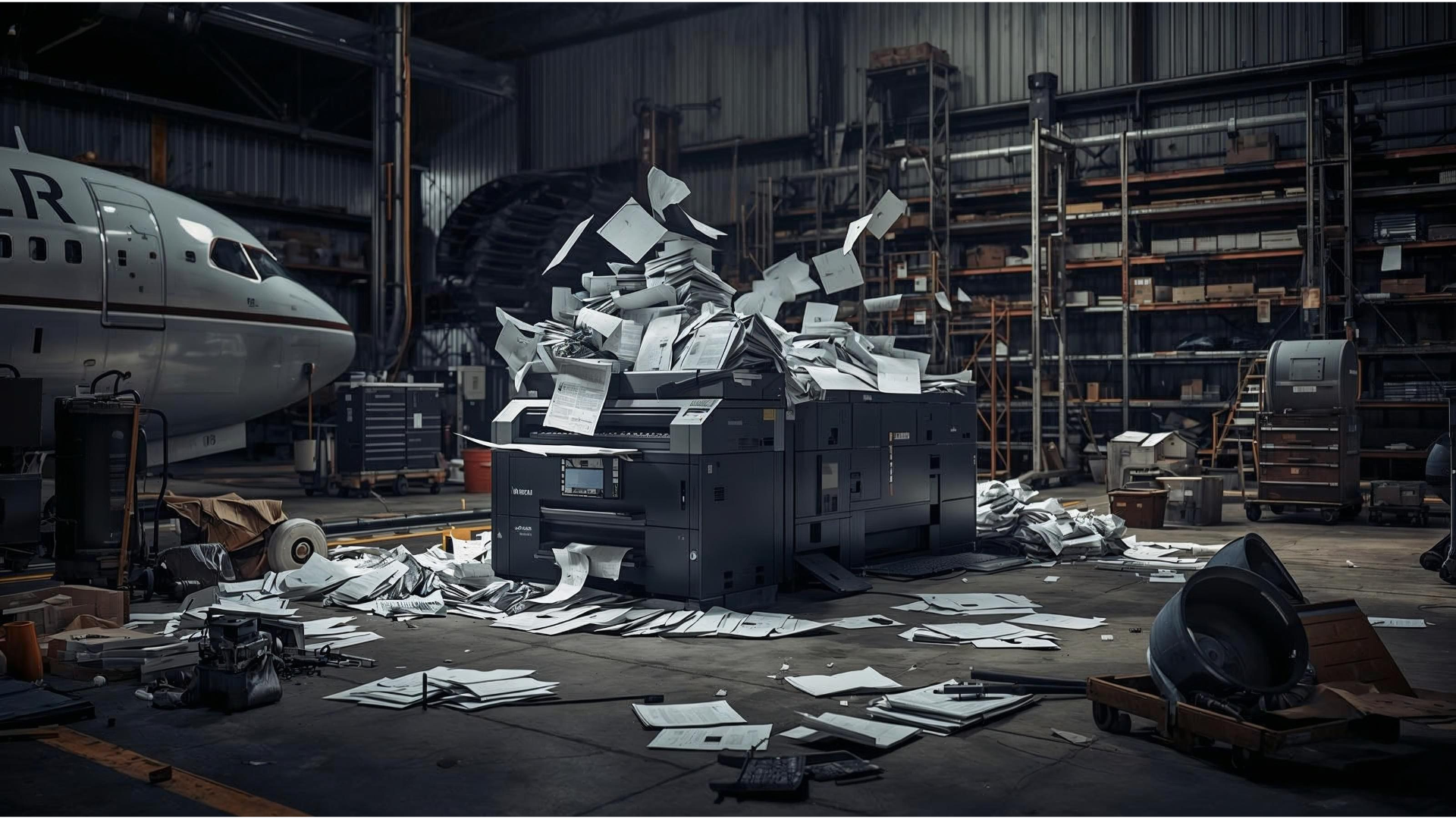
Even today, it’s common to see 50–75 pieces of paper generated for a single LRU overhaul, and countless more for engine, component, and heavy maintenance workflows. All of it must be handled, signed, filed, and stored, often in boxes that sit in warehouses for years just to satisfy audit and regulatory requirements.
Our new whitepaper, The Paperless MRO Blueprint, lays out why this must change and how MRO organizations can make real progress toward a fully digital, FAA-accepted operation. It’s not theory; it’s a practical, step-by-step roadmap drawn from real maintenance environments and real operational challenges.
Why Paperless MRO Can’t Be an “Eventually” Anymore
Every MRO leader I speak with agrees that going paperless is important. But the urgency is no longer a conversation about “efficiency someday.”
It’s about:
- Reducing audit exposure
- Eliminating rework
- Improving traceability
- Shortening TAT
- Making aviation technicians’ lives easier
- Reducing operational cost that adds no value
Paper slows everything down: from induction to disassembly, inspection, repair, QA, and final release. But what’s even more concerning is the amount of risk it introduces, such as missing signatures, illegible notes, misplaced travelers, and incomplete documentation chains.
Meanwhile, the FAA has made it clear through guidance such as AC 120-78B that electronic signatures and digital recordkeeping are not only acceptable but encouraged when proper controls are in place. The path is open—we simply have to walk it.
The Operation Cost of “We’ve Always Done It This Way”
The whitepaper illustrates a common component overhaul process where nearly every step triggers another printed form, traveler, tag, or approval.
Across a high-volume shop, this leads to:
- Thousands of pages generated weekly
- Excessive warehouse storage requirements
- Lost time searching for paperwork
- Manual data transcription errors
- Increased audit preparation time
- Duplicate work that adds no value
One comment in the whitepaper hit home for me: “We wanted electronic records 10 years ago, and we are just getting it now.” This is not for lack of desire but because many shops attempted partial digitization by scanning paper into PDFs. But scans aren’t digital records. They’re simply digital images of analog problems. True digital transformation starts before anything gets printed.
What the FAA Really Expects from Digital Workflows
Let me be clear: the FAA does not require MROs to go digital. But if you want to use electronic signatures, electronic logbooks, or digital recordkeeping systems, you must demonstrate:
- Data integrity
- Security
- Traceability
- Accessibility
When these principles are met, the FAA will accept your digital workflows. And once that acceptance is in place, the benefits compound across your entire operation.
A Practical, Eight-Step Blueprint for Going Paperless
The whitepaper outlines an eight-step transition plan that any MRO can follow, whether the organization is large or small, civilian or defense.
- Strategic Planning
- Regulatory Strategy
- Digital Manuals & Document Control
- Cybersecurity & Data Integrity
- Training & Change Management
- Connectivity & Infrastructure
- E-Signatures & Digital Approvals
- Continuous Improvement
This framework is not about replacing everything at once. It’s about guiding the transition in a structured, operationally grounded way.
Where Paper Still Belongs (and Where It Doesn’t)
There will always be some physical labels and tags that must remain—scrap tags, bin labels, tool calibration labels. That’s normal. But these represent a tiny fraction of shop documentation compared to the hundreds of pages that inspections, repairs, QA, and shipping typically generate. Digital systems should eliminate all unnecessary paper, not every scrap of it.
What True Digital Transformation Looks Like in Practice
One of the most compelling comparisons in the whitepaper shows a legacy paper-based workflow next to Impresa MRO’s electronic process.
In a digital environment:
• Travelers
• Inspection records
• Repair actions
• Work instructions
• QA notes
• Release certifications
• Customer packets
…all become part of a single Electronic Work Package (EWP).
These documents are:
• Fully searchable
• Secure and permission-controlled
• Audit-ready
• Accessible anywhere, on any supported device
Your Printers Will Tell You the Truth
One example from the whitepaper: an inspection area printer logged 1.3 million printouts in two years, costing more than $6,500 annually, and that was just one printer. Multiply that across your entire operation, and the financial case for going paperless becomes impossible to ignore. Printers don’t lie. They tell you exactly where your bottlenecks are and how much inefficiency you’re tolerating.
If You’re Ready to Modernize, We’re Ready to Help
As COO and Co-Founder of Impresa, I’ve seen firsthand that the shift to paperless MRO is not only achievable—it’s transformative. Whether you’re taking your first step or redesigning entire workflows, Impresa MRO provides the digital foundation to help you:
• Eliminate paper-based inefficiencies
• Accelerate compliance
• Improve audit readiness
• Reduce turnaround time
• Empower aviation technicians
• Drive sustained operational excellence
The question is no longer whether MROs should go paperless—it’s how quickly they can get there.
Download the compliance whitepaper or reach out to start your paperless MRO journey.